
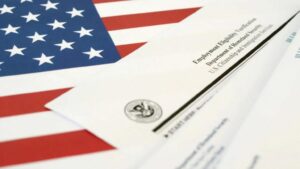
Hiring the right employees is critical for every organization, but employers must also ensure that every individual hired is legally authorized to work in the United States. Two key tools that help employers meet this obligation are Form I-9 (Employment Eligibility Verification) and E-Verify. Proper compliance protects organizations from significant fines, government audits, and reputational damage while supporting a lawful workforce. [uscis.gov], [uscis.gov]
What Is Form I-9?
Form I-9 is a federal employment eligibility verification form required for nearly every employee hired in the United States. Established under the Immigration Reform and Control Act (IRCA), the form requires employers to verify both the identity and employment authorization of each new hire. Employers must complete a Form I-9 for every employee hired after November 6, 1986, including U.S. citizens and noncitizen workers.
The I-9 process consists of three primary steps:
- Employee completes Section 1 on or before the first day of employment.
- Employer Reviews Original Documents and completes Section 2 within three business days of the employee’s start date.
- Supplement B (Reverification and Rehire) is completed when required for rehired employees or employees whose work authorization must be reverified.
Failure to properly complete or maintain I-9 forms can result in substantial penalties, even when an employee is legally authorized to work.
What Is E-Verify?
E-Verify is an internet-based system operated by the U.S. Department of Homeland Security (DHS) in partnership with the Social Security Administration. After an employer completes Form I-9, information from the form can be entered into E-Verify to electronically confirm employment eligibility by comparing the employee’s information against federal databases. [e-verify.gov], [e-verify.gov]
While E-Verify is generally voluntary for many private employers, it is mandatory for certain federal contractors and may be required by state law depending on the employer’s location. The system provides an additional layer of protection by helping employers identify discrepancies early in the hiring process. [e-verify.gov], [uscisguide.com]
Why Compliance Matters
I-9 and E-Verify compliance are essential because employers can be held liable for knowingly hiring or continuing to employ unauthorized workers. In addition, simple paperwork errors such as missing signatures, incorrect dates, or incomplete sections can lead to significant fines during an audit by Immigration and Customs Enforcement (ICE).
Beyond avoiding penalties, compliance demonstrates a commitment to ethical employment practices and helps organizations maintain eligibility for government contracts. Proper verification procedures also protect employers from allegations of discriminatory hiring practices when consistently applied to all new hires.
Record-Keeping Requirements
Federal regulations require employers to retain Form I-9 for all current employees. After employment ends, employers must keep the form for the later of:
- Three years from the employee’s date of hire, or
- One year after employment ends.
Forms may be stored:
-
- On paper
- Electronically
Employers must be able to provide I-9 records to government officials within three business days of an official inspection request. If document copies are retained, they should be stored with the corresponding I-9 form. Maintaining organized and secure records is critical because forms contain sensitive employee information.
Do I-9 Forms Need to Be Recertified or Reverified?
A common misconception is that all I-9 forms must be periodically recertified. In reality, most employees do not require reverification. Reverification is only necessary when an employee’s temporary employment authorization or employment authorization documentation expires. Employers use Supplement B (formerly Section 3) to document this process.
Employers should not reverify:
- U.S. citizens
- Noncitizen nationals
- Lawful permanent residents who presented a Permanent Resident Card (Form I-551)
- Employees who presented List B identity documents only
Reverification must occur on or before the expiration date of the employee’s work authorization. Employers often establish tracking systems and reminders to ensure timely compliance.
Potential Fines and Penalties
The financial consequences of noncompliance can be severe. As of 2025, civil penalties for substantive Form I-9 violations range from approximately $288 to $2,861 per violation. Employers who knowingly hire or continue to employ unauthorized workers may face penalties reaching up to $28,619 per violation, with higher penalties for repeat offenders.
Additional consequences may include:
- Criminal penalties for patterns of violations
- Debarment from federal contracts
- Government monitoring and audits
- Reputational damage and legal expenses
Given the increasing focus on workplace enforcement, employers should conduct periodic internal audits and train HR personnel on proper I-9 procedures.
Conclusion
Form I-9 and E-Verify are essential components of a sound workforce compliance strategy. Employers must accurately verify employment eligibility, maintain proper records, and understand when reverification is required. Failure to comply can result in substantial fines and legal consequences. By implementing strong documentation practices, conducting regular audits, and training HR staff, organizations can reduce risk and promote compliance with federal employment laws.
References
- U.S. Citizenship and Immigration Services (USCIS). Handbook for Employers (M-274): Guidance for Completing Form I-9. https://www.uscis.gov/i-9-central/form-i-9-resources/handbook-for-employers-m-274 [uscis.gov], [uscis.gov]
- USCIS. Retention and Storage of Form I-9. https://www.uscis.gov/i-9-central/completing-form-i-9/retention-and-storage [uscis.gov]
- USCIS. Completing Supplement B, Reverification and Rehires. https://www.uscis.gov/i-9-central/completing-form-i-9/completing-supplement-b-reverification-and-rehires-formerly-section-3 [uscis.gov]
- E-Verify. Employers. https://www.e-verify.gov/employers [e-verify.gov]


